

Member Spotlight! Shelly Butcher
Updated: May 13
Name: Shelly Butcher
Institution: The University of Queensland

Shelly, her PhD supervisor Laura Grogan and co-authors have recently published an important paper in the Australian Veterinary Journal describing novel fungal species responsible for Snake Fungal Disease in Australia. You can also read more about this in their article in The Conversation.
Year and type of graduate student program(s)/additional training:
2015: Bachelor of Science (Vet Bioscience), The University of Adelaide
2018: Doctor of Veterinary Medicine, The University of Adelaide
2022: Membership of ANZCVS by examination in Avian Medicine and Surgery
2022: Master of Veterinary Studies (Conservation Veterinary Medicine), Massey University. Thesis: “Pathogen prevalence and diversity in native and invasive New Zealand lizards”
2025 to present: Doctor of Philosophy, The University of Queensland. Thesis: “Understanding the threat of emerging fungal diseases in wild Australian reptiles”
What is it that attracted you to work on wildlife originally?
I was lucky enough to grow up in the Adelaide Hills, on a bush block across the road from a national park. We were surrounded by wildlife: koalas in the front yard, snakes in the house, and hours spent trying to catch little skinks in the garden. My dad was also a microbiologist, and I would regularly visit his lab, help dissect snails and birds to find novel parasites, and travel with the family to scientific conferences. This combination gave me a love of science, medicine, and nature, and by high school I had realised that being a wildlife vet was the perfect job for me.
What has attracted you to focus on amphibians and reptiles?
My love of herps started in childhood. My first pet was a green tree frog, which sparked an obsession with frogs and their health and disease. Learning about chytrid fungus was my first exposure to wildlife disease as a tangible threat to conservation, and from there my interest grew to reptiles.
My move to Aotearoa/New Zealand gave me my first real professional focus on reptiles. My masters project had me travelling to spectacular locations (including the crater of a volcano) to capture skinks and geckos to sample for pathogens. This project revealed to me just how neglected reptiles are in conservation veterinary medicine.
I have always seen herps as the "little guy" — the more commonly misunderstood and overlooked species. I try to represent and advocate for the smaller but no less important members of our ecosystems. This outlook is what led me to my PhD, which came about following some novel findings in lizards and snakes during my time as a clinical vet. More research was clearly needed, and it felt like fate that I should be the one to take it on!

How can WDA-A members find out more information about opportunities to work with these species and other native wildlife?
Getting involved with a university is a great way to find research and fieldwork experience. Masters and PhD students are always looking for volunteers, and it is a great way to get hands- on experience with wildlife in different settings. For clinicians, becoming a clinic representative for the Wildlife Health Australia Sentinel Surveillance Program is a fantastic way to contribute to larger data collection and wildlife disease surveillance programs. Attending conferences is also well worth it for expanding your network and getting exposed to different areas of wildlife health. If you are particularly into herpetology, the Australian Society of Herpetologists holds an annual conference run in a similar relaxed, school camp style to the Wildlife Disease Association Australasian (WDA-A) conference.

What are some key reflections for you about your work in the wildlife health field in Australasia?
One of my biggest reflections is that there is always so much more to learn. I never feel like I have mastered any aspect of wildlife medicine, and I think that is what keeps it exciting.
There is a still a huge amount of research to be done in this field. Reptiles and amphibians remain particularly underfunded and under-researched, especially considering the high proportion of endangered species. More research and funding in this space are urgently needed, and I hope my work is going some way towards contributing to that. Wildlife hospitals are an invaluable and often underutilised source of data and knowledge, and I think clinicians should be better supported to engage in research alongside their clinical work.
This field is immense, and there are so many different roles for wildlife vets and nurses. If you stay determined and open to all sorts of pathways, you can absolutely make a career in wildlife health.

What types of day-to-day decisions would be beneficial for conservation in Australia, particularly for herps?
Everyday actions to combat climate change will benefit all wildlife, but particularly herpetofauna. Rising temperatures stress wildlife and favour pathogen survival, and for ectotherms, disruptions to thermoregulation make them especially vulnerable. So, reducing our contribution to climate change is also a win for reptile health.
For herpers specifically, it is worth considering disease spread and animal stress before handling. Reptile enthusiasts are some of the most knowledgeable and passionate people I know, and herping is a wonderful way to connect with these species. Reducing unnecessary handling and practising good biosecurity between sites is a simple but meaningful step.
This ties into my broader concern around emerging disease. My PhD work has highlighted the real potential for disease introduction or spread in Australia if we are not careful, and reporting unusual findings or sick animals is something anyone can do.

How has being involved in the WDA-A section helped you during your career and what advice might you have for prospective students?
Being part of the WDA-A completely changed my outlook on a career in conservation medicine. The WDA-A community has been encouraging and supportive and showed me that pursuing wildlife medicine is a viable and important career pathway. I have been privileged to learn from some incredibly knowledgeable zoo and wildlife vets within this community and found a real sense of belonging along the way.
My advice would be to be collaborative. There is so much knowledge locked in the brains of experienced wildlife vets that never makes it into print. Talk with your colleagues, as they may have seen or tried things that are not written down anywhere. I love that wildlife vets are approachable, practical, and just want the best outcome for wildlife.

What is your favourite non-scientific activity and how do you find time for it?
My two favourites are gardening and hiking. In the garden I am particularly interested in permaculture, syntropic farming, and native bush regeneration. When I am not in the garden, I am happiest out hiking, particularly through rainforests and woodlands.
Finding the time requires being quite strict with my work hours and protecting my weekends. Living surrounded by national parks and state forests means a stunning hike is never far away, a guaranteed way to get off the screens, clear my head, and come back reinvigorated. Most of my free time is spent outside in the garden, and when the weather is bad my board game collection keeps me entertained.

It is easy to get bogged down when considering the future for wildlife, what helps you stay motivated and positive in this field?
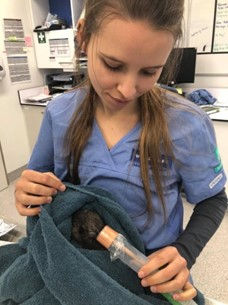
Working at wildlife hospitals can be relentless and heartbreaking as you see the day-to-day toll that humans are having on our wildlife. However, you witness amazing vets, nurses, and wildlife carers working around the clock to save animals and getting genuinely excited when a "lolly" comes in (a little treat in the form of a rare or particularly cool species). Seeing that enthusiasm in others is infectious and inspiring.
My hope is that future generations see the value in the natural world and start to make meaningful change to the way humans live alongside nature. For me, even a small contribution to increasing the chances of saving a species or restoring wildlife abundance feels worthwhile. Taking my niece and nephew on hikes and watching them get excited about the natural world is a reminder of why this work matters.
Anything else you want to highlight/talk about? Favourite WDA-A memory?
My favourite WDA-A memory was my first ever WDA-A conference at Falls Creek, Victoria. It was my first experience being surrounded by passionate wildlife advocates who have dedicated their lives to conservation. I can be quite shy, but I found it easy to chat with WDA-A members, everyone was welcoming and just happy to talk about wildlife. I will never forget our ecologist keynote speaker giving the most captivating talk about mistletoe, inspiring me to think about conservation more broadly and reminding me that this organisation is about so much more than just wildlife disease.


Comments